Foundation problems make homeowners nervous, and some companies in this industry profit from that. Our approach is different: we inspect, we tell you which cracks are cosmetic and which are structural, and we put the repair scope in writing. Plenty of inspections end with us telling the owner to monitor a hairline crack and spend nothing.
When repair is needed, we handle crack injection, settling slab work, drainage corrections, and concrete replacement tied to foundation issues. For problems that need engineered piering, we tell you that plainly and you can bring in a structural engineer with our assessment in hand.
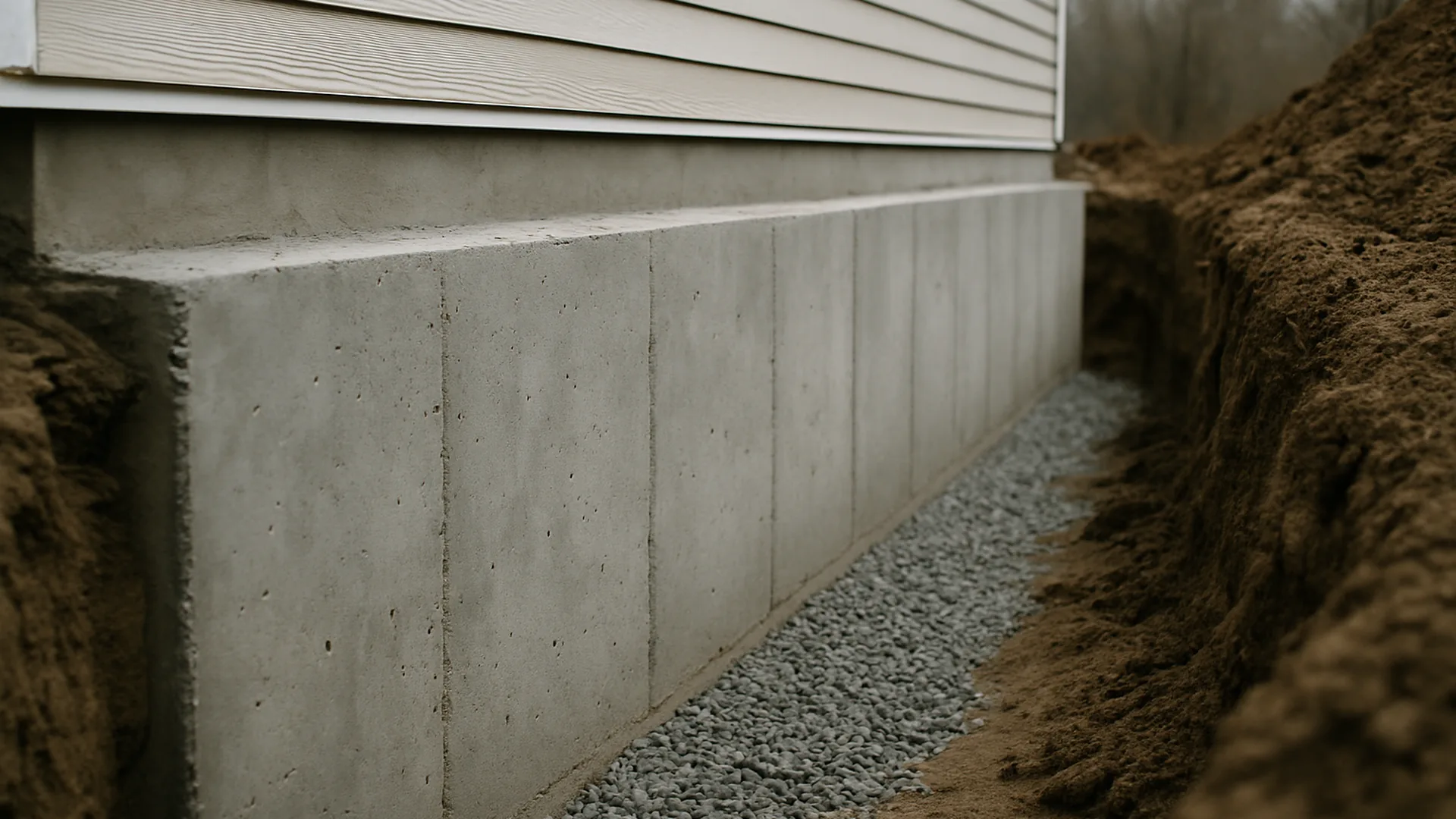
What you get
Warning signs Lawrence homeowners should not ignore
Douglas County clay swells when wet and shrinks hard in August droughts, and your foundation rides on top of that movement. The early signals are stair-step cracks in brick or block, doors and windows that start sticking in one season and free up in another, gaps opening between trim and walls, and hairline cracks radiating from the corners of openings.
Not every crack is structural. Shrinkage cracks in poured walls are common and often need nothing more than sealing to keep water out. The cracks that earn attention are wider than a quarter inch, wider at one end than the other, horizontal runs in basement walls, or any crack that keeps growing season over season. Mark the ends with a pencil and a date; if it moves, call.
Water is the cause more often than soil alone. Short downspouts, negative grading, and clogged gutters feed the clay right at your footing. Half the foundation calls we run in Lawrence get solved with drainage correction plus crack repair, not piers, and we will tell you when that is the case.
How we approach foundation repair and what it costs
Every job starts with an inspection that maps cracks, checks floors for slope, and looks at the grading and gutter picture outside. You get a written scope that separates what is structural, what is cosmetic, and what is drainage, with a price on each part. No commissioned inspector, no scare tactics, no $40,000 surprise.
Typical repairs range from epoxy or polyurethane crack injection at a few hundred dollars per crack, to wall reinforcement, to drainage correction with regrading and downspout extensions that usually lands between $1,500 and $5,000. Where settlement is real and ongoing, we scope pier work honestly and tell you what it costs before anyone commits.
We back the work in writing and we stay accountable to it, because we live in the same county you do. A foundation contractor you can find next year matters more in this trade than in any other.
Drainage: the cheapest foundation insurance in Kansas
Most foundation movement in Douglas County traces back to water management, which means most prevention is cheap. Gutters sized and cleaned, downspouts extended 6 to 10 feet from the wall, and soil graded to fall away from the house at least 6 inches over the first 10 feet. That package costs hundreds and prevents repairs that cost thousands.
Consistent moisture beats both extremes. Clay that soaks every spring and bakes every August moves the most, so the goal is keeping the soil near the foundation as evenly damp as practical. In drought months, a soaker hose run sparingly around the perimeter is a legitimate tool, odd as it sounds.
When we repair a foundation crack, the scope includes the drainage causes, not just the symptom. Injecting a crack while the downspout keeps dumping at the same corner sells you the same repair twice, and that is not how we keep neighbors as customers.
Why Lawrence foundations move
Douglas County clay is the root cause of most foundation calls we take. Expansive clay swells in wet springs and shrinks in dry summers, and that seasonal cycle works on a foundation year after year. The 2022 and 2023 drought summers were hard on local foundations: extended dry spells pulled moisture out of the clay, soil shrank away from footings, and a wave of settling cracks showed up across town the following spring.
The pattern we see most in Lawrence is water management failure, not construction failure. Downspouts dumping at the foundation, flowerbeds graded toward the house, and patios or driveways that slope the wrong way all feed water to the clay right where you least want it. A large share of our foundation work is actually exterior concrete work: repouring a settled patio or walkway with correct slope so the foundation stops taking water. That fix often costs a fraction of structural repair.
Older Lawrence housing stock brings its own patterns. Homes in the older neighborhoods east and north of campus often sit on limestone rubble or early block foundations that handle moisture differently than modern poured walls. We inspect those with the age of the construction in mind. If you see stair-step cracking in block, doors that suddenly stick, or a crack you can fit a coin in, get an inspection scheduled. Early movement is cheap to address. Ignored movement is not.
Where we do this work
We provide foundation repair across Lawrence and Douglas County:
Foundation Repair: common questions
How do I know if a foundation crack is serious?
Hairline vertical shrinkage cracks are usually cosmetic. Horizontal cracks, stair-step cracks in block, widening cracks, and cracks paired with sticking doors or sloping floors warrant inspection. We will tell you which category yours falls in at no charge.
How much does foundation repair cost in Lawrence?
Crack injection often runs a few hundred dollars per crack. Drainage and slab corrections typically run in the low thousands. Structural piering is a larger project. We price after inspection and put every scope in writing.
Will my homeowners insurance cover foundation repair?
Usually not for soil movement, which most policies exclude. Damage from a covered event like a plumbing leak may qualify. We document our findings so you have what you need for a claim conversation.
Do you fix the cause or just the crack?
Both. Sealing a crack without fixing the water or soil problem that caused it just delays the next call. Every repair scope addresses the source.