
Last Updated: December 19, 2025
Your concrete driveway in Lawrence is constantly under attack. Winter freezing, summer heat, deicing salts, and moisture infiltration work together to break down even the most well-constructed driveways. Without proper protection, that $6,000 driveway investment can develop cracks, spalling, and surface deterioration within just a few years. The solution? Choosing the right concrete sealer designed specifically for northeast Kansas conditions.
For Lawrence homeowners, selecting the best concrete sealant for driveways Lawrence KS isn’t just about slapping on any product from the hardware store. The region’s unique climate—with freeze-thaw cycles, temperature extremes, and heavy salt use—demands professional-grade protection. Local contractors who have served the area for decades understand that the right sealer, applied correctly and maintained on schedule, can extend your driveway’s life by 10-15 years or more.
Quick Answer: What’s the Best Driveway Sealer for Lawrence?
For most Lawrence driveways: Professional-grade silane/siloxane penetrating sealers provide the best protection against freeze-thaw damage and deicing salts while maintaining a natural appearance. For decorative or stamped driveways, high-quality acrylic film-forming sealers enhance color and add gloss, though they require more frequent reapplication every 2-3 years.
Key Takeaways:
- Penetrating silane/siloxane sealers offer superior water and chloride resistance for standard driveways
- Acrylic film-forming sealers work best for decorative and stamped concrete surfaces
- Resealing every 2-3 years is essential for Lawrence’s climate conditions
- Professional application by experienced local contractors ensures optimal performance
- Proper base preparation and concrete quality matter as much as the sealer choice
Understanding Lawrence’s Unique Driveway Challenges
Lawrence sits in a climate zone that presents specific challenges for concrete driveways. According to the National Weather Service, northeast Kansas experiences significant temperature fluctuations, with winter lows often dropping below freezing and summer highs exceeding 90°F. This constant expansion and contraction stresses concrete at the molecular level.
The Freeze-Thaw Cycle Problem
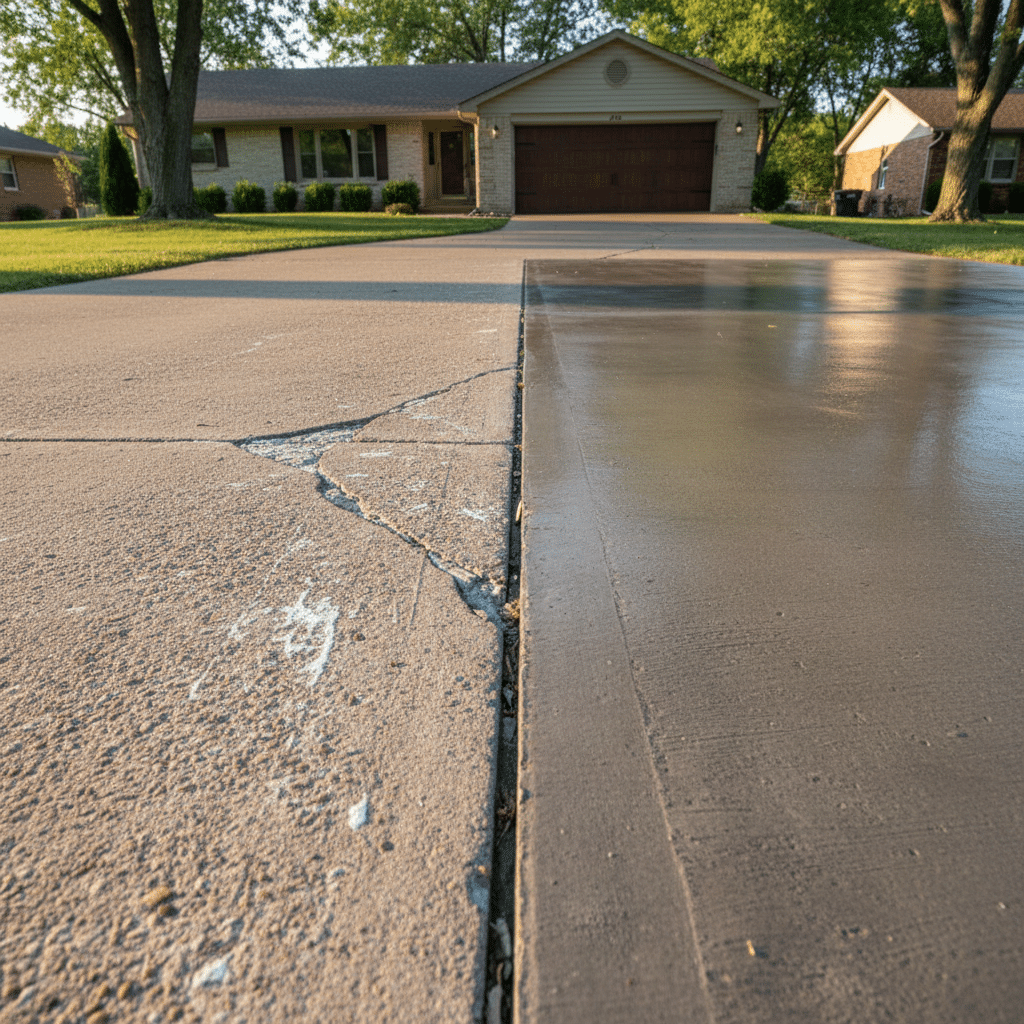
Water penetrates concrete through microscopic pores. When temperatures drop, that water freezes and expands by approximately 9%, creating internal pressure that causes surface scaling and spalling. Over multiple winter seasons, this deterioration accelerates. Lawrence’s climate typically sees 20-40 freeze-thaw cycles per winter, making protection critical.
The best defense is preventing water infiltration in the first place. This is where the right sealer becomes essential. Penetrating sealers work by chemically bonding with the concrete to create a hydrophobic barrier deep within the surface, while still allowing vapor to escape—a crucial feature that prevents trapped moisture from causing internal damage.
Deicing Salt and Chemical Exposure
Lawrence residents rely heavily on deicing salts during winter months. While these chemicals keep driveways safe, they’re devastating to unsealed concrete. Chloride ions from salt penetrate the surface, accelerating corrosion of any embedded rebar and causing surface deterioration. Research from Wikipedia shows that salt exposure can reduce concrete service life by 50% or more without proper protection.
This is why local contractors emphasize chloride resistance as a primary selection criterion when choosing the best concrete sealant for driveways Lawrence KS conditions. Silane and siloxane molecules are small enough to penetrate deeply but create a barrier that specifically repels chloride ions while allowing the concrete to breathe.
Soil Movement and Moisture Issues
Northeast Kansas soil contains significant clay content, which expands when wet and contracts when dry. This movement can stress driveways from below. Local contractors who specialize in foundation repair in Lawrence often see similar issues affecting driveways, particularly where drainage is inadequate.
Types of Concrete Sealers: What Works Best in Lawrence
Not all concrete sealers are created equal, and what works in Arizona’s dry climate may fail spectacularly in Kansas. Understanding the main sealer categories helps you make an informed decision for your specific driveway type and aesthetic preferences.
| Sealer Type | Best For | Service Life | Appearance |
|---|---|---|---|
| Silane/Siloxane Penetrating | Standard driveways | 5+ years | Natural/matte |
| Acrylic Film-Forming | Stamped/decorative | 2-3 years | Glossy/wet look |
| Polyurethane/Polyaspartic | High-end decorative | 7-10 years | High gloss |
Penetrating Silane/Siloxane Sealers
These are the workhorses for Lawrence driveways. Silane and siloxane are small molecules that penetrate 1-4mm into the concrete surface, where they chemically react to create a hydrophobic (water-repelling) barrier. The key advantage is that they allow vapor transmission—moisture trapped inside can escape, preventing blister formation and freeze-thaw damage from within.
Professional-grade products marketed specifically for Lawrence conditions use virgin, non-recycled resins for superior performance. These sealers maintain the concrete’s natural appearance, making them ideal for standard gray or broom-finish driveways. When properly applied to well-installed concrete slabs, they can last 5-7 years before reapplication is needed.
Acrylic Film-Forming Sealers
For decorative, stamped, or colored driveways, acrylic sealers are often the better choice. These products form a protective film on the surface that enhances color depth and can provide anything from a satin to high-gloss “wet look” finish. Local specialists who have served northeast Kansas for decades often recommend acrylic sealers for architectural finishes.
The trade-off is durability. Acrylic films wear faster under tire traffic and UV exposure, typically requiring reapplication every 2-3 years. They’re also more susceptible to hot-tire pickup in summer heat and can become slippery when wet unless anti-slip additives are incorporated. However, for homeowners who want to preserve and showcase their decorative driveway investment, the enhanced appearance justifies the more frequent maintenance schedule.
Common Mistakes When Sealing Lawrence Driveways
Even with the right product, improper application or timing can waste money and fail to protect your driveway. Understanding these pitfalls helps ensure successful results.
Sealing Too Soon After Installation
New concrete needs time to cure fully before sealing. Most professionals recommend waiting at least 28 days—preferably 60-90 days—after concrete installation before applying a sealer. Premature sealing traps moisture and prevents proper curing, which can actually weaken the concrete and cause discoloration or blistering.
Inadequate Surface Preparation
Sealer won’t bond properly to dirty, oily, or contaminated concrete. Professional application includes thorough cleaning with appropriate degreasers, pressure washing to remove debris, and ensuring the surface is completely dry. Moisture content should be below 4% before sealing—something many DIY attempts overlook. Lawrence’s humidity can make this challenging, requiring contractors to schedule work during dry weather windows.
Using the Wrong Product for the Concrete Type
A common mistake is applying a penetrating sealer to decorative concrete expecting color enhancement, or using a film-forming sealer on standard driveways where breathability is more important than appearance. Working with experienced concrete contractors in Lawrence ensures you get the right product recommendation based on your specific driveway characteristics and goals.
Best Practices for Sealer Selection and Application
Getting optimal results from your driveway sealer investment requires attention to product selection, application timing, and ongoing maintenance. Here’s what local professionals recommend.
Match Product to Local Climate Demands
When evaluating products, verify they’re specifically rated for freeze-thaw exposure and deicing salt resistance. Professional-grade sealers marketed for northeast Kansas conditions typically meet these requirements. Look for products that explicitly mention chloride resistance and vapor permeability—two critical features for Lawrence driveways.
Hire Qualified Local Applicators
While DIY sealing is possible, professional application typically delivers superior results and longer service life. Experienced contractors understand optimal coverage rates, proper spray or roll techniques, and can identify potential issues before they become problems. Check the Better Business Bureau for ratings and review platforms like Angi for contractor performance in your area.
Local firms that have served the Lawrence area for decades bring invaluable experience with regional conditions. They know which products perform best on Kansas soil, understand seasonal application windows, and can coordinate sealing with complementary services like crack repair or joint maintenance.
Establish a Maintenance Schedule
No sealer lasts forever. For penetrating sealers, plan to reapply every 5-7 years, or sooner if water no longer beads on the surface. For acrylic film-forming products, expect to reseal every 2-3 years. Following these concrete driveway maintenance tips can extend your driveway’s life by a decade or more.
Step-by-Step: Professional Sealer Application Process
Understanding the proper application process helps you evaluate contractor proposals and ensures work is done correctly.
Step 1: Surface Assessment
Professionals evaluate concrete condition, checking for cracks, spalling, or existing sealers that need removal. They test moisture content and identify any repairs needed before sealing.
Step 2: Cleaning and Preparation
The driveway is thoroughly cleaned using pressure washing (2500-3000 PSI), degreasers for oil stains, and appropriate cleaners for efflorescence or mineral deposits. The surface must then dry completely—typically 24-48 hours depending on temperature and humidity.
Step 3: Product Application
Sealer is applied using low-pressure sprayers or lint-free rollers at manufacturer-specified coverage rates. Penetrating sealers typically require one coat; film-forming acrylics often need two coats applied perpendicular to each other for even coverage.
Step 4: Curing and Traffic Restriction
Sealer needs time to bond and cure. Penetrating products typically allow foot traffic after 2-4 hours and vehicle traffic after 24 hours. Film-forming sealers need 24-48 hours before foot traffic and 48-72 hours before vehicles.
Frequently Asked Questions
How much does professional driveway sealing cost in Lawrence?
Typical costs range from $0.50 to $2.50 per square foot depending on product quality, surface condition, and whether it’s a standard or decorative finish. For a standard 600-square-foot driveway, expect to pay $300-$1,500 for professional sealing.
Can I seal my driveway in winter?
Most sealers require temperatures above 50°F during application and curing. In Lawrence, this typically limits professional sealing to spring through fall. Some advanced products can be applied in cooler weather, but application windows are limited.
How do I know when my driveway needs resealing?
Test water absorption by sprinkling water on the surface. If it darkens quickly rather than beading up, the sealer is no longer effective. Other signs include increased staining, surface dusting, or color fading on decorative concrete.
Will sealing fix existing cracks?
No, sealers protect against future damage but don’t repair existing problems. Cracks should be cleaned and filled with appropriate repair materials before sealing. This is particularly important in Lawrence’s climate where small cracks quickly expand through freeze-thaw action.
Are there eco-friendly sealer options?
Yes, water-based penetrating and acrylic sealers have lower VOC (volatile organic compound) content than solvent-based products. While solvent-based products often penetrate deeper and last longer, modern water-based formulations have improved significantly and perform well in most applications.
Conclusion: Protecting Your Lawrence Driveway Investment
Selecting the best concrete sealant for driveways Lawrence KS conditions requires understanding both product chemistry and regional climate challenges. For most standard driveways, professional-grade silane/siloxane penetrating sealers offer the optimal combination of water repellency, chloride resistance, and long-term durability. Decorative and stamped surfaces benefit from acrylic film-forming sealers that enhance appearance, though they require more frequent maintenance.
The key to success lies not just in product selection but in proper application by experienced local contractors who understand northeast Kansas conditions. Combined with a disciplined resealing schedule every 2-5 years depending on product type, professional sealing can extend your driveway’s service life by decades while maintaining its appearance and structural integrity through Lawrence’s demanding freeze-thaw cycles.
Don’t wait until significant damage appears. Proactive sealing, started early in your driveway’s life and maintained consistently, represents a small investment that protects a much larger one—ensuring your driveway remains safe, attractive, and functional for years to come.
Sources and References
1. National Weather Service – Climate data for northeast Kansas
2. Wikipedia – Concrete degradation and protection methods
3. Lawrence Concrete Pros – Local contractor expertise and best practices
4. Better Business Bureau – Lawrence area concrete contractor ratings
5. Industry standards for concrete sealing in freeze-thaw environments
Disclaimer: This article provides general information about concrete sealers and maintenance. Specific product recommendations should be made by qualified professionals based on your driveway’s unique conditions. Costs and performance may vary based on application quality, product selection, and environmental factors.