
Last Updated: November 20, 2025
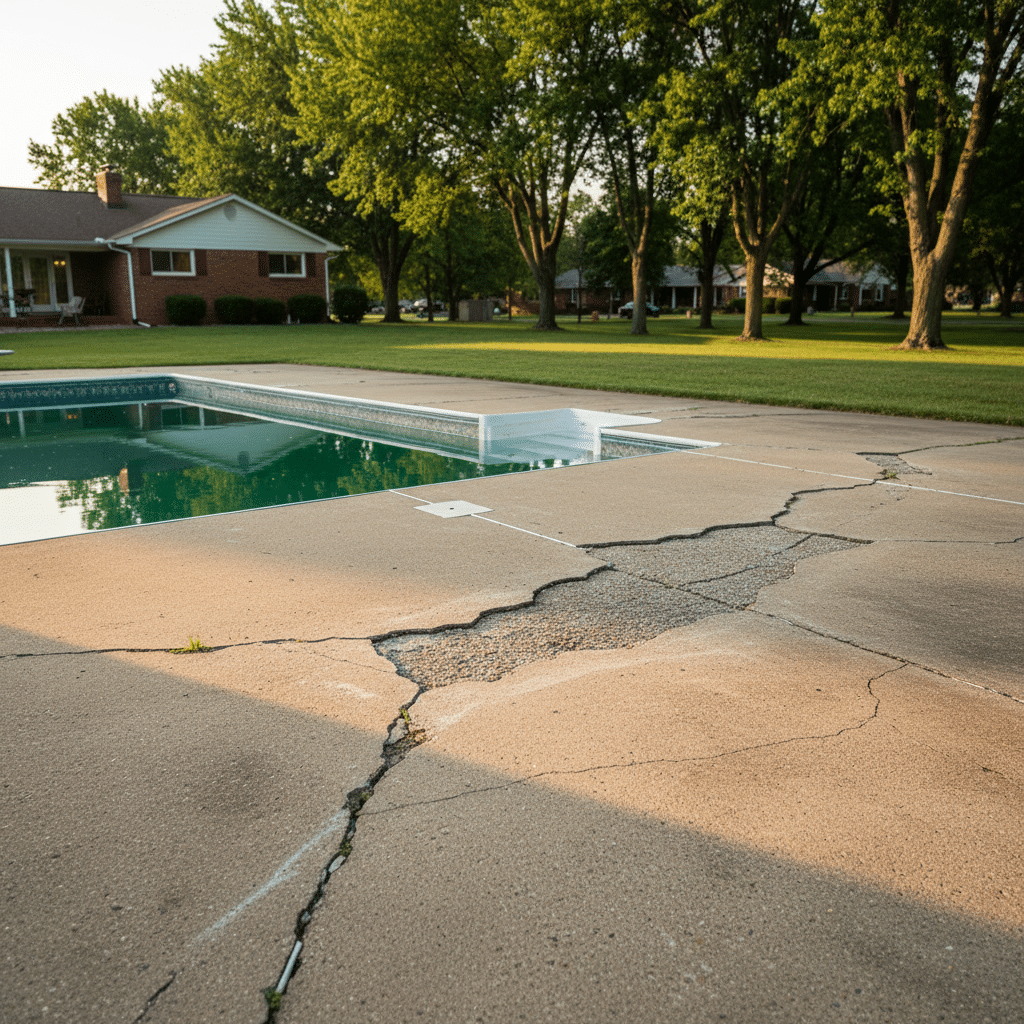
Is your pool deck showing signs of cracking, spalling, or settling? In Lawrence, Kansas, where temperature fluctuations and freeze-thaw cycles can wreak havoc on concrete surfaces, pool deck deterioration isn’t just an aesthetic problem—it’s a safety hazard that demands immediate attention. With the Lawrence Outdoor Aquatic Center currently undergoing a comprehensive $2+ million renovation that includes complete deck replacement, property owners across the city are discovering just how critical proper pool deck maintenance really is.
Whether you’re dealing with minor surface cracks or considering a complete overhaul, understanding the specialized requirements of swimming pool deck repair in Lawrence KS can save you thousands while ensuring your pool area remains safe and functional for years to come. The unique climate conditions, soil composition, and building code requirements in Douglas County make pool deck work here distinctly different from other regions.
Quick Answer: What You Need to Know
Pool deck repair in Lawrence typically costs between $6-12 per square foot for resurfacing and $15-25 per square foot for complete replacement. Projects require city permits for structural work, must comply with ADA accessibility standards, and should address drainage issues specific to Kansas clay soil conditions.
Key Takeaways:
- Lawrence’s freeze-thaw cycles cause unique concrete damage requiring specialized repair techniques
- City building codes mandate permits for structural pool deck alterations
- Proper drainage systems prevent 80% of long-term pool deck problems
- ADA compliance is mandatory for commercial properties and increasingly recommended for residential
- Professional assessment saves an average of $3,000-5,000 versus DIY misdiagnosis
Understanding Pool Deck Deterioration in Lawrence
Lawrence’s climate presents specific challenges for concrete pool decks. With winter temperatures frequently dropping below freezing and summer highs exceeding 90°F, the expansion and contraction cycles stress concrete continuously. Add in the region’s expansive clay soil—known for its significant moisture-related movement—and you have conditions that accelerate concrete degradation faster than in many other parts of the country.
The freeze-thaw weathering process occurs when water penetrates concrete pores, freezes, expands, and causes internal pressure that eventually manifests as surface cracks and spalling. This phenomenon is particularly aggressive around pool areas where water exposure is constant and chemical treatments can further compromise concrete integrity.
Common Damage Types
Surface cracking typically appears as hairline fissures that gradually widen. While minor cracks under 1/8 inch may seem cosmetic, they provide entry points for water that accelerate deeper structural damage. Spalling—where the concrete surface flakes or chips away—often indicates that the freeze-thaw cycle has already compromised the concrete’s internal structure.
Settling and heaving result from soil movement beneath the deck. Lawrence’s expansive clay soils can shift dramatically with moisture changes, causing sections of pool decking to drop or rise unevenly. This creates trip hazards and drainage problems that worsen over time. Similar to issues addressed in driveway repair projects, proper substrate preparation is critical.
Chemical and Environmental Factors
Pool chemicals create a uniquely corrosive environment. Chlorine, pH balancers, and sanitizers that splash onto decking surfaces can react with concrete, accelerating deterioration. The calcium in hard water—common in Lawrence—can also create surface deposits that trap moisture against the concrete, promoting freeze-thaw damage.
UV exposure degrades sealants and surface treatments over time, reducing the deck’s natural defense against water penetration. In Lawrence’s high-UV environment, especially during summer months, this degradation occurs faster than in cloudier climates, necessitating more frequent resealing—typically every 2-3 years for optimal protection.
Common Mistakes in Pool Deck Repair
Understanding what not to do is often as important as knowing the correct approach. Many pool owners in Lawrence make costly errors that turn manageable repairs into expensive replacements.
Ignoring Drainage Issues
The single most common mistake is addressing surface damage without fixing underlying drainage problems. When water pools on or around a deck, every freeze-thaw cycle multiplies damage exponentially. Proper drainage requires a minimum 1/4 inch per foot slope away from the pool, with consideration for where water will ultimately flow. Professional installations often incorporate trench drain systems—similar to those used in the recent Lawrence Aquatic Center renovations—to manage high-volume water runoff effectively.
Without proper drainage, even premium repair materials will fail prematurely. This is why many contractors specializing in concrete water management systems bring valuable expertise to pool deck projects.
Using Inappropriate Repair Materials
Not all concrete repair products are created equal, and pool deck applications demand specific characteristics. Materials must be freeze-thaw resistant, chemically stable in the presence of pool chemicals, and have expansion coefficients compatible with existing concrete. Standard concrete patching compounds often lack these properties and fail within a single season.
Premium polymer-modified overlays, epoxy-based repair mortars, and specialized resurfacing systems designed for pool applications cost more initially but provide dramatically longer service life. The cost difference between appropriate and inappropriate materials is typically $3-5 per square foot, but the lifespan difference can be 10-15 years.
Skipping Permits and Code Compliance
According to Lawrence building codes, significant pool deck repairs require permits—particularly when structural elements are involved or when work affects accessibility features. The International Building Code standards adopted by Lawrence mandate specific requirements for pool deck construction and repair.
Unpermitted work can result in fines, mandatory removal and replacement at the owner’s expense, and complications when selling property. More importantly, code requirements exist to ensure safety—proper slip resistance, structural integrity, and emergency access. The permit process typically adds $200-500 to project costs but provides essential oversight and documentation.
Best Approach to Swimming Pool Deck Repair Lawrence KS
Successful pool deck repair requires systematic assessment, appropriate material selection, and expert execution tailored to Lawrence’s specific conditions.
Professional Assessment and Planning
A thorough professional evaluation examines not just visible damage but underlying causes. Quality assessments include ground-penetrating radar or concrete scanning to identify subsurface voids, core sampling to determine concrete strength and composition, and drainage analysis to map water flow patterns. This diagnostic phase typically costs $300-600 but often reveals problems that would otherwise cause repair failure.
Professional contractors factor in Lawrence-specific considerations: soil reports for the property, historical weather data impact, pool equipment locations and their drainage implications, and compliance with both city codes and ADA requirements where applicable. Communities like Lecompton KS share similar soil and climate conditions, making regional expertise particularly valuable.
Selecting the Right Repair Method
| Repair Method | Best For | Cost Range | Expected Lifespan |
|---|---|---|---|
| Crack Filling/Sealing | Minor cracks under 1/4″ | $3-6/sq ft | 3-5 years |
| Overlay/Resurfacing | Surface damage, cosmetic issues | $6-12/sq ft | 10-15 years |
| Mudjacking/Slabjacking | Settled sections, uneven areas | $5-10/sq ft | 5-10 years |
| Complete Replacement | Structural damage, extensive cracking | $15-25/sq ft | 20-30 years |
The choice depends on damage extent, budget, and long-term plans. For a typical 600-square-foot pool deck, resurfacing might cost $3,600-7,200, while complete replacement could run $9,000-15,000. These figures align with broader concrete work in Lawrence—for comparison, a 600-square-foot driveway replacement costs approximately $6,000.
Timing Your Project
In Lawrence, optimal pool deck repair timing is late spring through early fall, when temperatures remain consistently above 50°F and rain is less frequent. Most repair materials require minimum temperatures of 40-50°F for proper curing, and projects need 3-7 days of dry weather depending on the method used.
The city’s current Outdoor Aquatic Center renovation demonstrates strategic timing—Phase 2 construction begins after the 2026 swim season ends, with completion targeted before summer 2027. This approach minimizes disruption while allowing sufficient time for proper execution.
Step-by-Step Pool Deck Repair Process
Understanding the repair process helps property owners make informed decisions and set realistic expectations.
Initial Preparation and Site Assessment
Contractors begin by thoroughly cleaning the deck surface and conducting detailed damage mapping. This includes photographing all cracks and deterioration, measuring settlement amounts, and testing drainage performance. Power washing removes surface contaminants, algae, and loose material that would interfere with repair adhesion.
Subsurface evaluation identifies void spaces beneath the deck—common in Lawrence where soil erosion undermines concrete. Ground-penetrating radar or manual probing reveals these hidden problems before repair work begins. Addressing voids typically involves foam injection or traditional mudjacking to restore solid support.
Structural Repairs and Substrate Work
Major cracks require routing—cutting them wider to create proper profiles for repair material adhesion. Contractors typically route cracks to 1/2-3/4 inch width and depth, creating a reservoir for epoxy or polyurethane injection. This technique prevents crack propagation and bonds damaged sections back together structurally.
Spalled areas need complete removal of compromised concrete down to sound material. This often means removing 1-2 inches of surface in affected zones. The exposed substrate receives thorough cleaning and bonding agent application before new concrete or repair mortar is placed. These same principles apply to other decorative concrete applications, as detailed in guides about decorative concrete benefits for Lawrence homes.
Resurfacing and Finishing
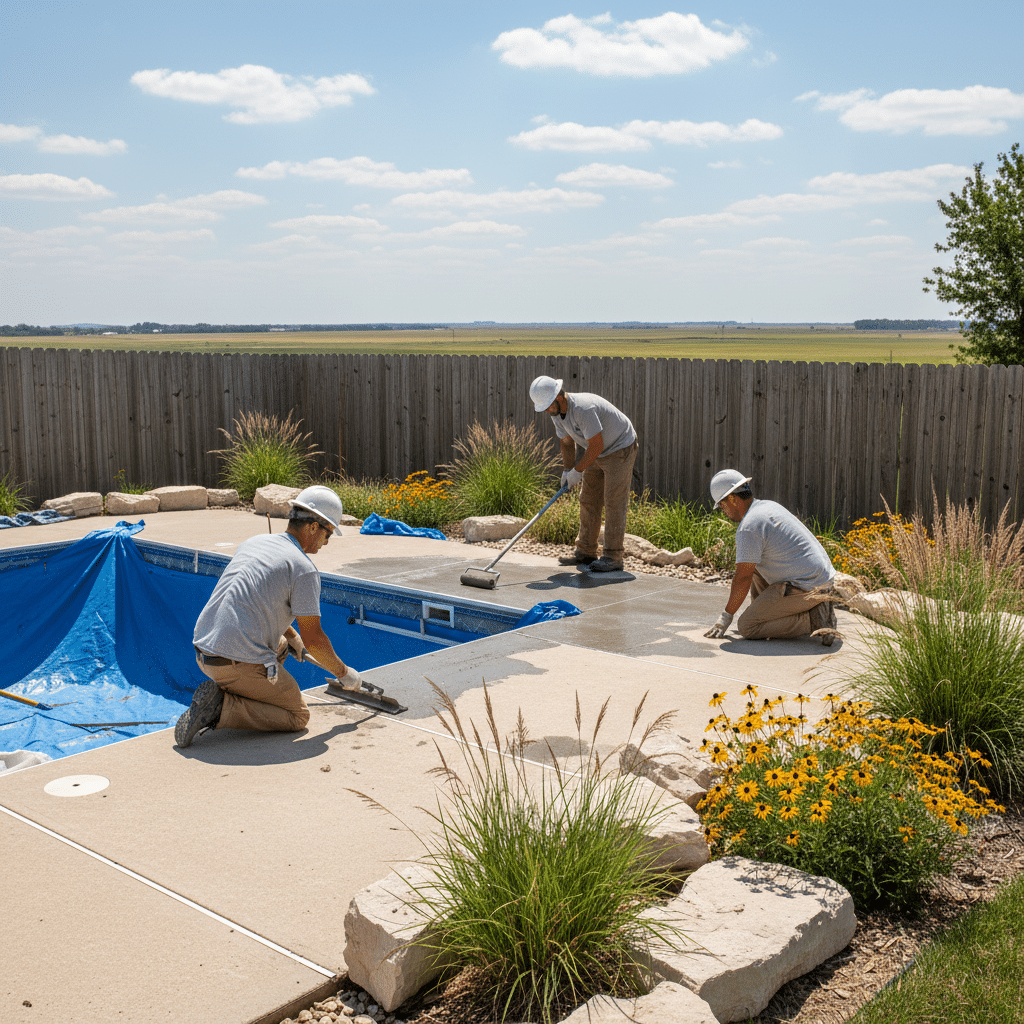
Once structural repairs cure, resurfacing products are applied. Modern polymer-modified overlays provide superior durability compared to traditional concrete. These materials bond mechanically and chemically to existing concrete while offering enhanced freeze-thaw resistance and chemical stability—critical in pool environments.
Texture application ensures proper slip resistance. Pool decks require surface textures that provide traction when wet without being abrasive to bare feet. Options include broom finishes, knockdown textures, or stamped patterns. The final step involves sealing with penetrating sealers that protect against water intrusion while allowing vapor transmission—essential for preventing trapped moisture damage.
Frequently Asked Questions
How long does pool deck repair last in Lawrence’s climate?
Professional repairs using quality materials typically last 10-15 years for overlays and 20-30 years for complete replacements, assuming proper drainage and regular maintenance. Lawrence’s freeze-thaw cycles do reduce lifespan compared to milder climates, making material quality and installation expertise critical factors.
Do I need a permit for pool deck repair in Lawrence?
Structural repairs, complete replacements, and work affecting accessibility features typically require permits from the City of Lawrence. Minor cosmetic repairs like sealing or crack filling generally don’t need permits, but consulting with the building department before starting ensures compliance. Emergency repairs can proceed immediately, with permits filed shortly after.
Can I use my pool during deck repairs?
Pool use depends on repair extent. Minor crack sealing might allow same-day pool use after material curing (typically 2-4 hours). Resurfacing projects require keeping the pool area clear for 3-7 days to allow proper curing. Complete replacement projects may require pool closure for 2-4 weeks. Contractors can often work in sections to minimize disruption.
What maintenance prevents pool deck damage?
Regular sealing every 2-3 years, prompt crack repair when cracks first appear, maintaining proper drainage to prevent water pooling, and winter preparation including clearing standing water before freezes all significantly extend deck life. Annual professional inspections catch problems early when repairs are simpler and less expensive.
How does pool deck repair compare to patio work?
Pool decks face more aggressive conditions than standard patios—constant water exposure, chemical contact, and bare-foot traffic requiring specific slip resistance. While techniques overlap, pool work demands specialized materials and greater attention to drainage. Many contractors offering concrete patio installation in Lawrence also handle pool decks, but pool-specific experience is important.
Conclusion
Proper swimming pool deck repair in Lawrence KS requires understanding local climate challenges, selecting appropriate materials and methods, and working with experienced professionals who know regional conditions. With the city’s Outdoor Aquatic Center demonstrating the importance of comprehensive deck renovation through its ongoing $2+ million project, residential and commercial property owners have a clear example of how proper planning and execution create lasting results.
Whether addressing minor cracks or planning complete replacement, investing in quality repairs protects property value, ensures safety, and extends the usable life of your pool facility. Lawrence’s freeze-thaw cycles and expansive clay soils make professional assessment essential—the expertise gained from years of working with local conditions cannot be replicated by out-of-area contractors or DIY approaches.
As November 2025 approaches the end of the outdoor pool season, now is the ideal time to assess your pool deck condition and plan any needed repairs for early spring implementation. Taking proactive steps ensures your pool area is safe, attractive, and ready for many seasons of enjoyment.
Financial Disclaimer: Cost estimates provided are based on current market conditions in Lawrence, Kansas as of November 2025 and may vary based on specific project requirements, material selection, contractor rates, and unforeseen site conditions. Always obtain multiple written quotes from licensed contractors before proceeding with pool deck repair work.
Sources and References
- City of Lawrence Outdoor Aquatic Center Renovation Project (2025-2027)
- Lawrence Building Code Requirements, City of Lawrence, Kansas
- International Building Code (ICC) standards for pool deck construction
- Freeze-thaw weathering effects on concrete structures (Wikipedia)
- Lawrence Aquatic Center historical records (1969-2025)
- Douglas County soil composition and building implications data