
Last Updated: December 23, 2025
Is there a flooring option that combines the raw, industrial appeal of exposed concrete with the warmth and character of custom staining? In Lawrence, KS, stained concrete floors have emerged as a transformative design solution that bridges historic preservation with contemporary aesthetics. From chocolate-stained entryways in renovated schools to polished concrete showcasing exposed brick in adaptive reuse projects, this flooring trend offers durability, low maintenance, and striking visual impact that traditional materials simply can’t match.
Whether you’re renovating a downtown commercial space, updating a residential interior, or exploring modern alternatives to hardwood and tile, understanding the unique considerations for stained concrete floors in Lawrence, KS will help you make informed decisions. From local climate challenges like freeze-thaw cycles to the city’s rich architectural heritage that influences design choices, this guide covers everything you need to know about this versatile flooring option.
Quick Answer: What Are Stained Concrete Floors?
Stained concrete floors use acid-based or water-based stains to penetrate and permanently color concrete slabs, creating rich, variegated tones ranging from earthy browns and terra cottas to blues and greens. This process transforms plain concrete into durable, low-maintenance flooring with unique character that complements both modern and historic design schemes.
Key Takeaways:
- Stained concrete costs $2-$6 per square foot for basic installations, significantly less than hardwood or tile
- Lawrence’s freeze-thaw cycles require air-entrained concrete for long-term durability
- Popular in adaptive reuse projects throughout downtown Lawrence, including commercial and residential spaces
- Combines well with historic architectural features like exposed brick and original stonework
- Maintenance involves simple dust mopping and occasional resealing every 2-3 years
Understanding Stained Concrete in Lawrence’s Architectural Context
Lawrence, KS has a unique architectural heritage that makes stained concrete particularly appealing. Concrete has been integral to local construction since the early 20th century, from iconic roadside structures like the 1930 Indian Village teepee along US-40 to post-WWII suburban developments that favored concrete slabs on grade for cost-effective construction.
The Rise of Stained Concrete in Adaptive Reuse Projects
When our team works on renovations throughout Lawrence, we’ve observed that concrete floor installations have gained significant traction in adaptive reuse projects. A notable 2005 renovation transformed a former school into a business office, featuring chocolate-stained concrete floors in the new entryway alongside preserved historic stone markers dating from 1866, 1903, and 1955. This project exemplifies how staining allows property owners to modernize spaces while respecting historic character.
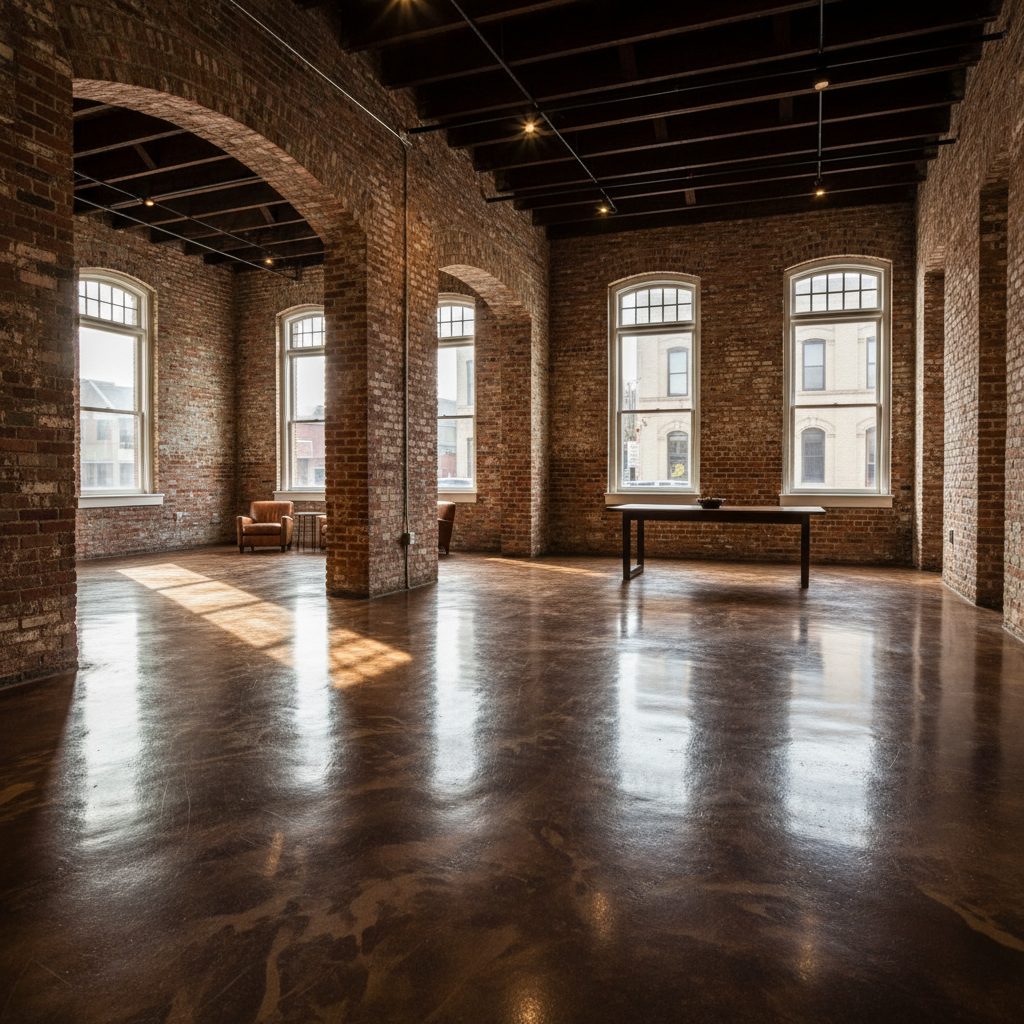
The historic Poultry Building showcases another successful application, with polished concrete flooring complementing original brick walls and exposed ductwork. This blended historic-modern aesthetic has become increasingly popular for event spaces and commercial properties throughout the downtown area near Massachusetts Street, particularly in zip codes 66044 and 66046 where many historic commercial buildings are concentrated.
Climate Considerations for Lawrence Concrete Floors
According to the National Weather Service, Lawrence experiences significant temperature swings and freeze-thaw cycles that affect concrete performance. Due to Kansas’s freeze-thaw cycles, we always specify air-entrained concrete for any new pours or overlays before staining. This regional adaptation prevents moisture infiltration and surface spalling that would compromise both the structural integrity and aesthetic appeal of stained floors.
The city’s flood history—including major events in 1935 and 1951 that damaged structures like the Indian Village complex—demonstrates concrete’s resilience when properly installed. This durability makes stained concrete an excellent choice for ground-level commercial spaces and residential basements throughout Lawrence and surrounding Douglas County.
Common Mistakes When Installing Stained Concrete Floors
Before diving into the benefits of decorative concrete for Lawrence homes, it’s important to understand common pitfalls that can compromise your investment in stained concrete flooring.
Skipping Proper Surface Preparation
The most critical mistake homeowners and contractors make is inadequate surface preparation. Existing concrete slabs often contain sealers, oils, or residues that prevent stain penetration. In older Lawrence buildings—particularly those constructed during the post-WWII boom when concrete slabs on grade became standard—floors may have accumulated decades of coatings, waxes, or adhesives from previous flooring installations.
Professional preparation involves grinding or acid-etching the surface to open the concrete’s pores. Skipping this step results in blotchy, uneven staining that can’t be corrected without complete removal and refinishing. We coordinate with Evergy and Kansas Gas Service when working on basement installations to ensure utility lines are properly marked before any grinding or cutting operations begin.
Choosing the Wrong Stain Type for Your Application
Acid-based stains create rich, variegated tones through a chemical reaction with the concrete’s minerals, producing earthy browns, terra cottas, and blue-greens. Water-based stains offer a broader color palette with more predictable, uniform results. The mistake is selecting based solely on color preference without considering the substrate condition, intended use, and desired aesthetic.
For historic renovations in downtown Lawrence where you want to complement exposed brick and original architectural details, acid-based stains typically provide the organic, mottled appearance that harmonizes with aged materials. For modern residential interiors or garage floors in Lawrence where uniform color is preferred, water-based stains offer more control.
Neglecting Proper Sealing and Maintenance Planning
Stained concrete without proper sealing is vulnerable to moisture penetration, staining from spills, and premature wear—especially in high-traffic commercial applications. The sealer selection matters tremendously: penetrating sealers maintain the natural matte appearance preferred in many historic renovations, while topical sealers add gloss and provide more robust protection for retail or restaurant environments.
In our experience working with Lawrence residents, many underestimate the importance of maintenance scheduling. While stained concrete is remarkably low-maintenance compared to hardwood or tile, it does require resealing every 2-3 years depending on traffic levels. Failing to plan for this maintenance results in gradual degradation that diminishes the floor’s appearance and protective qualities.
Cost Factors for Stained Concrete Floors in Lawrence
Understanding the investment required for stained concrete helps property owners make informed decisions. Pricing varies based on several factors specific to the Lawrence market and individual project requirements.
| Project Type | Price Range (per sq ft) | Typical Applications |
|---|---|---|
| Basic Single-Color Stain | $2-$4 | Garages, basements, workshops |
| Multi-Tone Acid Staining | $4-$6 | Living spaces, commercial interiors |
| Custom Patterns/Scoring | $6-$10 | Retail spaces, high-end residential |
| Full Polishing + Stain | $8-$15 | Event venues, restaurants, showrooms |
For a typical 1,000-square-foot residential space in Lawrence’s Barker neighborhood (66046) or near the University of Kansas campus (66045), expect total costs ranging from $2,000 for basic staining to $10,000 or more for comprehensive polishing, multi-color staining, and decorative treatments. This compares favorably to hardwood flooring ($8,000-$15,000) or high-quality tile ($6,000-$12,000) for the same area.
Factors Affecting Project Costs
Several variables influence the final investment for stained concrete in Lawrence:
- Existing Slab Condition: Older buildings may require extensive grinding to remove previous coatings or repair cracks and surface defects before staining
- Color Complexity: Single-tone staining is straightforward, while layered colors or custom patterns require additional labor and materials
- Surface Area and Layout: Larger, open spaces cost less per square foot than smaller rooms with many obstacles or irregular shapes
- Sealer Selection: Basic acrylic sealers are economical, while high-performance polyurethane or epoxy topcoats add to the cost but provide superior durability
- Local Building Requirements: Douglas County and Lawrence city codes may require specific preparations or permits for commercial installations
Best Practices for Stained Concrete Installation
Achieving professional results with stained concrete requires careful planning and execution. When customers visit locations throughout Lawrence—from renovated downtown spaces to newer residential developments in zip code 66049—they often ask about the process behind these stunning floors.
Evaluating Your Existing Concrete Slab
Not all concrete is suitable for staining. The ideal candidate is a dense, well-cured slab free from major cracks, spalling, or moisture issues. In Lawrence’s older homes—particularly those built during the post-WWII construction boom when concrete quality varied—thorough inspection is essential. Look for signs of previous adhesive residue from carpet or vinyl flooring, oil stains in garage areas, or efflorescence indicating moisture problems.
Professional evaluation includes moisture testing using calcium chloride tests or electronic meters. Excess moisture can prevent proper stain penetration and sealer adhesion, leading to premature failure. This is particularly important for below-grade applications common in Lawrence basements.
The Staining Process Step by Step
Professional stained concrete installation follows a systematic approach. First, surface preparation involves thoroughly cleaning and either mechanically grinding or acid-etching the concrete to create an absorbent surface. This step determines the final quality more than any other factor. Next, test applications on inconspicuous areas reveal how the stain will react with your specific concrete—essential because acid stains create unique patterns based on the concrete’s mineral content and age.
Application technique varies by stain type. Acid stains are typically sprayed in overlapping patterns, allowed to react for several hours, then neutralized and rinsed. Water-based stains can be sprayed, rolled, or brushed depending on the desired effect. Multiple coats build color intensity gradually. After staining, proper curing time—typically 24-48 hours—is critical before sealing. Finally, two to three coats of sealer protect the stained surface and enhance its appearance.
Combining Staining with Polishing Techniques
For projects seeking the luminous quality seen in Lawrence’s Poultry Building or architect Dan Rockhill’s residential designs, polished concrete in Lawrence, KS can be combined with staining for exceptional results. This involves grinding the concrete with progressively finer diamond abrasives to expose aggregate and create a glass-smooth surface, then applying stain, and finally buffing with even finer grits.
This combined approach produces floors that are both visually striking and incredibly durable—ideal for high-traffic commercial applications throughout downtown Lawrence or modern residential spaces. The polishing process densifies the concrete surface, making it more resistant to wear and reducing the need for topical sealers in some applications.
Design Trends and Color Options for Lawrence Homes
The aesthetic possibilities with stained concrete extend far beyond the “industrial gray” that many people envision. Understanding current design trends helps property owners make choices that complement Lawrence’s unique architectural character.
Popular Color Palettes in Lawrence Projects
Warm earth tones dominate Lawrence installations, reflecting the region’s natural landscape and complementing the red brick common in historic downtown buildings. Chocolate brown staining—as seen in the 2005 school renovation project—remains popular for its rich warmth that bridges traditional and contemporary aesthetics. Terra cotta and rust tones created with acid stains harmonize beautifully with limestone accents and native Kansas stone.
For more adventurous applications, charcoal and slate gray stains provide a sophisticated backdrop for modern interiors, particularly in loft-style conversions of downtown commercial buildings. These cooler tones highlight exposed ductwork, steel beams, and the industrial elements preserved in adaptive reuse projects throughout the Massachusetts Street corridor.
Integrating Decorative Elements
Beyond solid color staining, decorative concrete techniques add distinctive character. Saw-cut patterns create the appearance of tile or stone without grout lines that require maintenance. Geometric designs can reference historical patterns found in Lawrence’s Victorian-era buildings, creating continuity between old and new elements.
Stenciling allows incorporation of logos, borders, or custom artwork—particularly valuable for retail businesses or restaurants seeking branded environments. Multiple stain colors applied in layers create depth and complexity impossible to achieve with traditional flooring materials. According to concrete industry research from the Concrete Network, these decorative techniques have grown increasingly popular as homeowners and designers recognize concrete’s versatility.
Frequently Asked Questions About Stained Concrete Floors
How long do stained concrete floors last?
With proper sealing and maintenance, stained concrete floors can last the lifetime of the building. The stain penetrates into the concrete and becomes a permanent part of the surface, unlike coatings that can peel or wear away. Resealing every 2-3 years maintains protection and appearance, but the color remains stable indefinitely.
Can existing concrete slabs be stained?
Yes, existing concrete is often ideal for staining, provided it’s in good condition without major damage or moisture issues. Many of Lawrence’s most successful stained concrete projects utilize existing slabs from buildings dating back decades. The concrete actually develops better character with age as carbonation and weathering create more receptive surfaces for acid-based stains.
Are stained concrete floors cold and uncomfortable?
Concrete has high thermal mass, meaning it absorbs and retains temperature. In winter, unsealed concrete can feel cold underfoot, but area rugs provide warmth where desired. Many Lawrence homeowners pair stained concrete with radiant floor heating systems for the ultimate combination of beauty, efficiency, and comfort. The concrete’s thermal properties then become an asset, efficiently distributing warmth throughout the space.
What maintenance do stained concrete floors require?
Stained concrete is remarkably low-maintenance compared to other flooring options. Regular dust mopping or vacuuming removes dirt and grit that can abrade the sealer. Damp mopping with pH-neutral cleaners handles spills and deeper cleaning. Avoid acidic or alkaline cleaners that can damage the sealer. Professional resealing every 2-3 years in residential applications (more frequently for commercial spaces) maintains protection and appearance.
Can stained concrete be repaired if damaged?
Minor scratches or wear patterns in the sealer can be addressed by resealing the affected area. However, because acid stains react chemically with each concrete slab’s unique mineral content, perfectly matching repairs can be challenging. For significant damage, grinding and restaining larger sections may be necessary to blend repairs invisibly. This is one reason why choosing experienced contractors matters—proper installation minimizes the likelihood of issues requiring repair.
Conclusion: Making Stained Concrete Work for Your Lawrence Property
Stained concrete floors represent a compelling intersection of durability, aesthetics, and value for Lawrence, KS properties. From historic downtown renovations that honor the city’s architectural heritage to modern residential installations showcasing contemporary design sensibilities, this flooring option delivers performance and visual impact that traditional materials struggle to match.
Whether you’re considering stained concrete for a commercial space near Massachusetts Street, a residential renovation in the Barker neighborhood, or any property throughout Douglas County, understanding the local climate considerations, cost factors, and design possibilities empowers you to make informed decisions. The key to success lies in proper surface preparation, selecting appropriate stain types and application techniques for your specific project, and committing to the minimal but essential maintenance that preserves your investment for decades.
As demonstrated by successful projects throughout Lawrence—from the chocolate-stained entryway of the renovated school building to the polished concrete showcasing historic brick in the Poultry Building—stained concrete adapts beautifully to diverse architectural contexts. Local providers like Lawrence Concrete Pros understand the unique requirements of working in this region, from coordinating with utility companies to specifying air-entrained mixes that withstand freeze-thaw cycles.
For property owners throughout zip codes 66044, 66046, and 66049, stained concrete offers a practical path to distinctive, durable flooring that complements Lawrence’s evolving architectural landscape while respecting its historic foundations. The investment delivers not just immediate visual transformation, but decades of reliable performance with minimal maintenance demands—a combination that’s hard to beat in today’s competitive real estate market.
Sources and References
- National Weather Service – Topeka, KS: Climate data and freeze-thaw cycle information
- Concrete Network: Polished concrete techniques and industry trends
- Local historical records: Indian Village teepee, Poultry Building, and downtown renovation projects
- Douglas County building records and architectural surveys
Financial Disclaimer: Cost estimates provided are based on current market conditions as of December 23, 2025, and are subject to change based on project specifics, material availability, and contractor pricing. Always obtain multiple quotes for accurate project budgeting.