
Most concrete in Lawrence, KS fails early. Not because the concrete itself was bad. It fails because nobody maintained it.
Kansas winters are brutal on flatwork. Temperatures in Douglas County swing from the low teens to the mid-40s within a single week, sometimes within 48 hours. That freeze-thaw cycle cracks driveways, pits sidewalks, and destroys patio surfaces faster than most homeowners realize.
The good news? Concrete maintenance in Lawrence, KS is straightforward when you know what to do and when to do it. A few targeted actions each year can double the lifespan of your concrete and save you thousands in replacement costs.
This guide gives you four proven strategies you can start using this week. Each one includes step-by-step instructions and a realistic timeline for results.
Strategy #1: Seal Your Concrete Every 2 Years
Why It Works
Concrete is porous. Water seeps into those tiny pores, freezes, expands, and cracks the surface from the inside. A penetrating sealer blocks moisture from entering in the first place.
The Concrete Network reports that sealed concrete lasts up to 50% longer than unsealed concrete in freeze-thaw climates. Lawrence averages 30+ freeze-thaw cycles per winter, which makes sealing the single most impactful thing you can do.
Step-by-Step
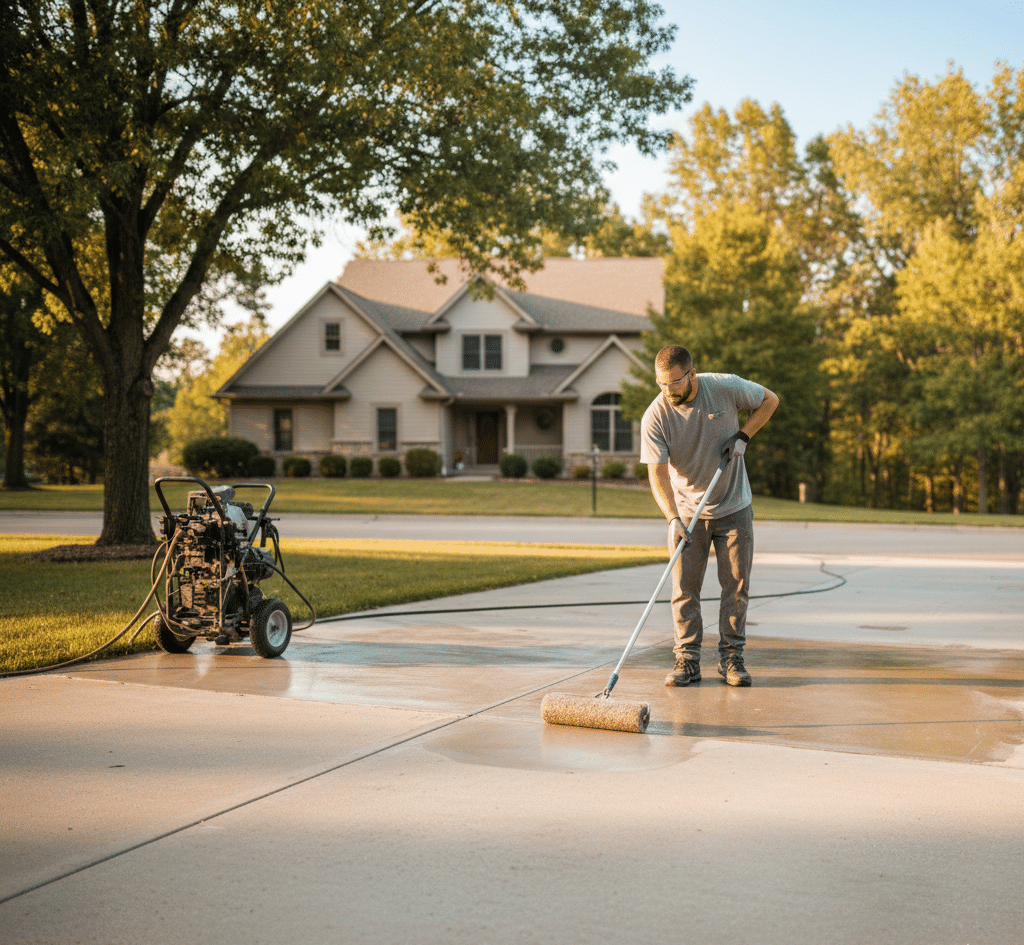
- Clean the surface thoroughly with a pressure washer set to 3,000 PSI. Remove all dirt, oil stains, and debris.
- Let the concrete dry completely for 24 to 48 hours. Moisture trapped under the sealer causes peeling.
- Apply a penetrating silane/siloxane sealer with a pump sprayer or roller. These outperform film-forming sealers in cold climates because they bond below the surface.
- Apply two thin coats rather than one thick coat. Wait 4 to 6 hours between coats.
- Stay off the surface for 24 hours. Keep vehicles off for 72 hours.
Expected Results Timeline
You will notice improved water beading within 24 hours of application. Full protection kicks in within 7 days as the sealer fully cures. Reapply every 2 years for continuous protection. Most homeowners spend $0.15 to $0.25 per square foot on sealer, which means a 600 sq ft driveway costs about $90 to $150 to protect for two full years.
Strategy #2: Fix Cracks Before They Spread
Why It Works
Small cracks become big cracks. A hairline crack in October becomes a quarter-inch gap by March if water gets in and freezes repeatedly. Fixing cracks when they are small costs a few dollars. Fixing them after they spread costs hundreds or requires full slab replacement.
Step-by-Step
- Inspect all concrete surfaces in early fall (September or October in Lawrence). Look for cracks wider than 1/16 of an inch.
- Clean each crack with a wire brush and remove loose material. Use compressed air to blow out dust and debris.
- For cracks under 1/4 inch, use a polyurethane or silicone-based crack filler. Apply with a caulk gun and smooth the surface with a putty knife.
- For cracks between 1/4 inch and 1/2 inch, use a concrete patching compound. Pack it firmly into the crack and feather the edges.
- For anything wider than 1/2 inch, consider calling a local Lawrence concrete contractor. Structural issues may be at play.
Expected Results Timeline
Crack filler cures within 24 to 48 hours. You will see an immediate visual improvement. The real payoff comes the following spring when your concrete survives winter without the damage spreading. Homeowners who repair cracks annually report spending 70% to 80% less on concrete replacement over a 10-year period compared to those who wait.
Strategy #3: Stop Using Rock Salt (Use This Instead)
Why It Works
Rock salt (sodium chloride) is cheap and easy to find in Lawrence. It is also destroying your concrete. Salt lowers the freezing point of water, which sounds helpful. But it creates more freeze-thaw cycles at the surface level, accelerating the exact damage you are trying to prevent.
The Portland Cement Association states that chemical deicers can cause surface scaling and spalling, especially on concrete less than one year old.
Step-by-Step
- Stop buying rock salt for your concrete surfaces immediately.
- Switch to calcium magnesium acetate (CMA) or sand for traction. CMA is concrete-safe and biodegradable.
- Apply deicers sparingly. More product does not mean faster melting. Use about 1 cup per 10 square feet.
- Shovel snow before applying any deicer. Removing the bulk of the snow first reduces the amount of product you need and limits surface exposure.
- Never use deicers on concrete that is less than 12 months old. New concrete has not fully cured and is extremely vulnerable to chemical damage.
Expected Results Timeline
This is a prevention strategy, so the results show up over time. Homeowners who switch from rock salt to CMA typically see a noticeable reduction in surface pitting and scaling by the second winter. Over 5 years, the difference is dramatic. Your concrete will look years younger than your neighbors’ slabs.
Strategy #4: Control Water Drainage Around Your Concrete
Why It Works
Water pooling on or against your concrete is the root cause of most damage. Standing water seeps into the slab. It erodes the subgrade beneath the concrete, causing settling and cracking. Proper drainage keeps water moving away from your surfaces and protects the foundation underneath.
Lawrence receives about 40 inches of rain per year, plus snowmelt. That is a lot of water hitting your concrete. Managing where it goes is just as important as sealing the surface.
Step-by-Step
- Walk your property during or right after a heavy rain. Note where water pools on or near concrete surfaces.
- Check that all downspouts direct water at least 4 feet away from concrete slabs. Add downspout extensions if needed.
- Grade the soil around your concrete so it slopes away from the surface at a minimum of 1 inch per foot for the first 6 feet.
- Fill any low spots in the yard near concrete with topsoil and seed or sod to prevent future pooling.
- Consider installing a French drain along the edge of large concrete areas like patios or pool decks if water issues persist.
Expected Results Timeline
Drainage improvements show results during the next significant rain event, usually within a week or two of making changes. The long-term payoff is reduced settling, fewer cracks, and a more stable slab. Homeowners who address drainage issues early extend the life of their concrete by 10 to 15 years on average.
Your Complete Concrete Maintenance Checklist
Protect your investment with proper maintenance and care. As a professional concrete contractor in Lawrence, we provide a comprehensive guide to help you maintain your concrete surfaces for maximum longevity and beauty:
- Regular Cleaning
- Debris removal and stains promptly
- Use appropriate cleaning products
- Avoid harsh chemicals that can damage concrete
- Seasonal Sealing
- Reapply sealer every 2-3 years
- Choose weather-appropriate sealers
- Professional application available
- Crack Prevention
- Address small cracks immediately
- Maintain proper drainage
- Avoid using de-icing chemicals
- Winter Care
- Use sand instead of salt for traction
- Remove snow carefully with snow plowing to prevent surface damage and ensure safe, clear paths
- Keep gutters clear to prevent water pooling
- Professional Maintenance
- Schedule regular inspections
- Address repairs promptly
- Maintain protective coatings
Protect Your Investment in Lawrence, KS
Concrete maintenance in Lawrence, KS does not have to be complicated or expensive. Seal your surfaces every two years. Fix cracks in the fall before winter hits. Ditch the rock salt. Control your drainage.
These four strategies work because they target the specific conditions Lawrence homeowners face: extreme freeze-thaw cycles, heavy precipitation, and clay-heavy soils that hold water.
Start with sealing. It takes one afternoon and costs less than $150 for a standard driveway. That single step alone can save you $3,000 to $5,000 in replacement costs down the road.
If your concrete already has serious damage, or you want professional help with any of these steps, reach out to a local Lawrence concrete contractor who understands the climate and soil conditions in Douglas County. Getting an expert assessment now is always cheaper than a full replacement later.