
Last Updated: December 23, 2025
Is water pooling on your concrete patio after every rainstorm? If you’re watching puddles sit for hours—or days—on your outdoor living space, you’re not alone. Poor drainage is one of the most common issues we encounter when working with homeowners throughout Lawrence, KS, from the historic neighborhoods near Massachusetts Street to newer developments off Wakarusa Drive. Left unaddressed, standing water can cause cracking, settling, and structural damage that costs thousands to repair.
The good news? Effective drainage solutions for concrete patios in Lawrence, KS don’t always require tearing out your entire slab. With proper assessment and targeted interventions—from strategic regrading to integrated waterproofing systems—you can protect your investment and enjoy a dry, functional outdoor space year-round. Kansas’ variable climate, with heavy spring rains and freeze-thaw cycles, makes proper drainage not just a convenience but a necessity for patio longevity.
Quick Answer: What Works for Patio Drainage?
Effective drainage for concrete patios requires proper slope (minimum 1/4 inch per foot away from structures), strategic gutter and downspout routing, and integrated systems like French drains or channel drains for problem areas. Solutions range from simple regrading to comprehensive waterproofing, with costs typically between $800-$3,500 depending on patio size and existing conditions.
Key Takeaways:
- Proper grading is foundational—patios should slope 1/4 inch per foot away from your home
- Gutter systems must direct water away from patio edges via underground drain tiles or extensions
- Kansas’ clay-heavy soils and freeze-thaw cycles require air-entrained concrete and proactive sealing
- Professional assessment identifies root causes, preventing costly band-aid fixes
- Most drainage retrofits can be completed without removing existing concrete
Understanding Why Concrete Patios Develop Drainage Problems
When we inspect patios throughout Lawrence, from East Lawrence’s older homes near the Kansas River to the newer subdivisions in the 66049 zip code area, we consistently see the same underlying issues. Understanding why drainage fails is the first step toward implementing lasting drainage solutions for concrete patios in Lawrence, KS.
Settlement and Soil Movement
Lawrence’s clay-heavy soils expand when wet and contract when dry, causing concrete slabs to settle unevenly over time. A patio that was properly sloped during installation in 2010 may now have low spots that collect water. This is particularly common in areas near Clinton Lake where soil composition varies significantly. According to the United States Geological Survey, expansive clay soils are responsible for more annual damage to structures than earthquakes and floods combined.
We’ve worked on dozens of patios where concrete leveling restored proper slope without full replacement. This targeted approach lifts settled sections using polyurethane foam injection, correcting drainage issues at a fraction of replacement costs.
Poor Initial Design or Installation
Not all patios are created equal. Some were installed without proper slope consideration, while others lack adequate base preparation. In neighborhoods near the University of Kansas, we often encounter rental properties where patios were installed quickly without attention to long-term drainage. A patio should slope consistently at 1/4 inch per foot minimum—that’s about 2 inches over an 8-foot span. Anything less, and water will pool during moderate rainfall.
Inadequate Perimeter Drainage
Even perfectly sloped patios can have problems if water has nowhere to go. When gutters overflow or downspouts discharge directly onto patio edges, the concrete becomes a collection basin. Before any major work, we always coordinate with Evergy to locate underground utilities, then assess how water flows from rooflines through the entire yard. This comprehensive view prevents solving one problem while creating another downstream.
Common Mistakes Homeowners Make with Patio Drainage
We see well-intentioned homeowners make the same mistakes repeatedly. Avoiding these pitfalls can save you thousands and prevent damage to your home’s foundation.
Attempting DIY Regrading Without Understanding Drainage Patterns
Adding soil around a patio’s edge seems straightforward—until that soil washes away in the next storm or directs water toward your foundation instead of away from it. Effective regrading requires understanding your property’s natural drainage patterns, soil types, and how neighboring properties affect water flow. In areas like West Lawrence near Clinton Parkway, where properties sit on slopes, amateur regrading can redirect water onto neighbors’ lots, creating liability issues.
Sealing Without Addressing Root Causes
Applying a waterproof sealer to your patio surface won’t fix drainage—it just keeps water on top longer. Sealers are valuable for protecting concrete from freeze-thaw damage, but they must be paired with proper slope and perimeter drainage. We’ve seen countless patios where homeowners spent hundreds on premium sealers while standing water continued to pool in the same low spots.
Ignoring Gutter and Downspout Integration
Your patio drainage system doesn’t exist in isolation. Clogged gutters or downspouts that dump water near patio edges overwhelm any drainage solution. According to research from the Environmental Protection Agency, a typical roof collects 600 gallons of water for every inch of rainfall. Without proper routing, that water flows directly onto your patio. We always inspect gutter systems and recommend extensions or underground drain tiles routing water at least 10 feet from structures.
Best Drainage Solutions for Lawrence Concrete Patios
Effective drainage solutions for concrete patios in Lawrence, KS, combine multiple strategies tailored to your specific situation. Here’s what actually works based on decades of combined experience serving the Lawrence area.
Strategic Regrading and Slope Correction
For patios with minor settling, mudjacking or polyurethane foam injection lifts settled sections to restore proper pitch. This process involves drilling small holes, injecting material beneath the slab, and raising it to the correct height. We’ve successfully corrected drainage on hundreds of patios this way, often completing the work in a single day. The investment typically ranges from $600-$1,800 for an average 12×16 patio, far less than the $6,000 approximate cost of replacing a 600-square-foot slab.
For more severe settlement, particularly near foundations, comprehensive concrete repair addressing both the patio and underlying soil conditions is essential. Due to Kansas’ freeze-thaw cycles—we can swing from 60°F to below freezing in a single winter week—we always specify air-entrained concrete that resists cracking from repeated expansion and contraction.
French Drains and Trench Systems
When water needs to be actively collected and diverted, French drains provide a proven solution. These perforated pipes surrounded by gravel intercept water before it reaches your patio. Installation involves trenching along the patio perimeter (typically 12-18 inches deep), laying perforated pipe on a gravel bed, and routing water to a daylight point or dry well away from structures.
In the older neighborhoods of East Lawrence where properties sit near the Kansas River’s historic floodplain, we’ve installed dozens of French drain systems that handle even heavy spring storms. The system cost ranges from $1,200-$3,500 depending on length and complexity, but it’s a permanent solution that protects both patio and foundation.
Channel Drains and Surface Collection
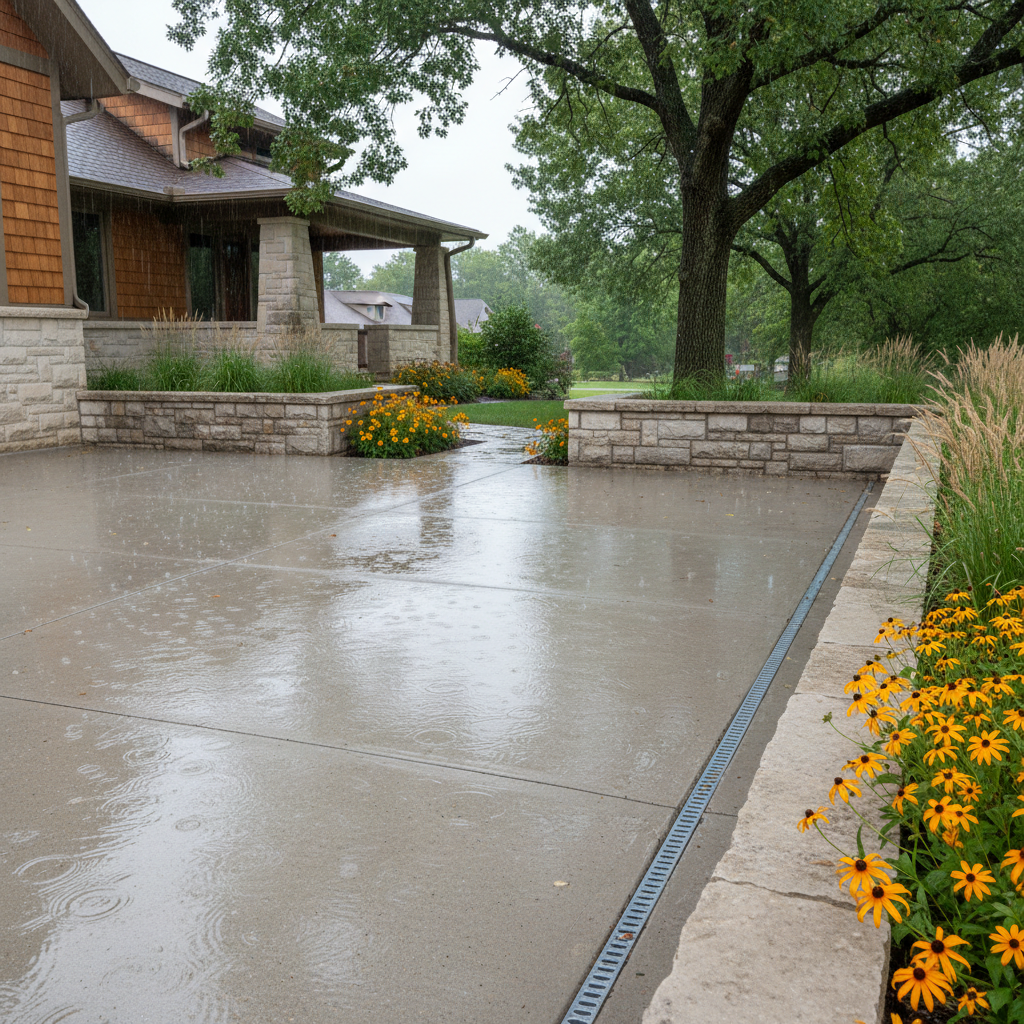
For patios where regrading isn’t feasible—perhaps because the slab sits at finished floor height—channel drains (also called trench drains) collect surface water. These linear drains with grated tops install along patio edges or across problematic areas, channeling water to underground pipes. We’ve used this approach successfully on covered patios and those with decorative stamped concrete finishes that homeowners want to preserve.
Step-by-Step Guide to Implementing Patio Drainage Solutions
Whether working with a contractor or tackling preliminary assessments yourself, follow this systematic approach to address patio drainage issues.
Step 1: Assess Current Conditions and Identify Problem Areas
During the next moderate rain (or using a garden hose), observe where water pools and how it flows off your patio. Take photos of problem areas. Check for cracks, settling, or gaps between the patio and house foundation. Note the location of gutters, downspouts, and nearby landscaping that might affect drainage. This documentation helps contractors provide accurate estimates and ensures everyone understands the scope.
Step 2: Get Professional Assessment from Multiple Contractors
Contact established local providers for free estimates. Firms like Morgan Concrete Services (operating since 1971), Breakers Concrete Services, Lawrence Landscape, and Lawrence Concrete Pros all offer drainage assessments. A quality contractor will inspect not just your patio but surrounding grading, gutter systems, and soil conditions. Be wary of anyone offering one-size-fits-all solutions without thorough site analysis.
Ask specific questions: What’s causing the drainage problem? What are my options, from least to most expensive? How long will the solution last? What maintenance is required? A contractor willing to explain trade-offs demonstrates expertise worth trusting.
Step 3: Prioritize Solutions Based on Severity and Budget
Not every patio needs a complete drainage overhaul. For minor pooling, extending downspouts and regrading landscaping might suffice ($300-$800). Moderate settling benefits from leveling plus perimeter drainage ($1,500-$2,500). Severe problems near foundations require comprehensive solutions including French drains, waterproofing, and potentially structural repairs ($3,000-$6,000+).
When planning a new patio installation, invest in proper drainage from the start—it’s far less expensive than retrofitting later. Our team always includes drainage planning in initial patio designs, accounting for Lawrence’s specific climate challenges.
Step 4: Schedule Work During Optimal Conditions
In Lawrence, late spring through early fall offers the best conditions for drainage work. Avoid frozen ground (mid-December through February) and the muddiest spring weeks (late March to April). Most drainage projects take 1-3 days depending on complexity. Plan for limited patio access during work and a brief curing period if new concrete is poured.
Cost Factors for Patio Drainage Solutions in Lawrence
Understanding what drives costs helps you budget appropriately and evaluate estimates. Here’s what influences pricing for drainage solutions in the Lawrence, KS area.
| Solution Type | Typical Cost Range | Best For |
|---|---|---|
| Downspout Extensions & Basic Regrading | $300-$800 | Minor pooling, preventive maintenance |
| Concrete Leveling (Mudjacking/Foam) | $600-$1,800 | Settled slabs with existing proper slope |
| French Drain Installation | $1,200-$3,500 | Persistent water accumulation, clay soils |
| Channel Drain System | $800-$2,200 | Surface collection, limited regrading options |
| Comprehensive Waterproofing & Drainage | $3,000-$6,000+ | Severe problems, foundation concerns |
Key cost factors include: patio size and accessibility, extent of settlement or damage, soil conditions (clay requires more robust solutions), integration with existing landscaping, and permit requirements. We serve homeowners throughout Douglas County, including zip codes 66044, 66046, and 66049, with transparent pricing based on thorough site assessment.
Frequently Asked Questions About Patio Drainage
How much slope does a concrete patio need for proper drainage?
The minimum recommended slope is 1/4 inch per foot (about 2% grade) away from your house. For an 8-foot-deep patio, that’s 2 inches of fall. Many contractors prefer 1/2 inch per foot for more positive drainage, especially in Lawrence where spring storms can drop several inches of rain in hours.
Can I fix drainage without removing my existing patio?
Yes, in most cases. Concrete leveling, perimeter French drains, and channel drains can all be installed without removing existing slabs. Only severely damaged patios with extensive cracking, deep settlement, or structural issues require replacement. A professional assessment determines which approach works for your situation.
How long do patio drainage solutions last?
Properly installed drainage systems last 15-25+ years with minimal maintenance. French drains and channel drains need periodic inspection and cleaning (every 3-5 years) to remove sediment. Concrete leveling is permanent unless additional settlement occurs. Regular gutter cleaning and downspout maintenance extend the life of any drainage system.
When is the best time to address patio drainage in Lawrence?
Late spring through early fall offers optimal conditions for drainage work. The ground is workable, and contractors can assess how water flows during natural rainfall. That said, don’t wait if you’re seeing foundation issues or severe pooling—winter water infiltration and freezing can cause significant additional damage.
Do I need a permit for patio drainage work in Lawrence?
Most drainage retrofits don’t require permits, but excavation near property lines or significant grading work may. Your contractor should verify requirements with the City of Lawrence Development Services Department. Any work affecting utilities requires contacting Kansas 811 for utility location before digging.
Protecting Your Investment for the Long Term
Effective drainage solutions for concrete patios in Lawrence, KS, protect more than just your outdoor living space—they safeguard your home’s foundation, prevent costly structural repairs, and ensure you can enjoy your patio without worrying about standing water after every storm. Whether you’re dealing with minor pooling or significant settlement issues, the right approach combines proper assessment, proven techniques, and local expertise that understands Kansas’ unique climate challenges.
Don’t wait until small drainage problems become major structural issues. From simple regrading to comprehensive French drain systems, solutions exist for every budget and situation. Our team has served Lawrence homeowners for years, delivering drainage solutions that last. Contact us today for a free assessment and discover how we can transform your problem patio into the functional outdoor space you deserve.
Disclaimer: This article provides general information about concrete patio drainage solutions. Every property has unique conditions that require professional assessment. Costs and timelines vary based on specific circumstances. Always consult with licensed contractors and verify local building codes before beginning work.
Sources and References
- United States Geological Survey (USGS) – Erosion and Weathering Science
- Environmental Protection Agency (EPA) – Rain Gardens and Water Management
- Morgan Concrete Services – 50+ years serving Lawrence, KS (established 1971)
- Breakers Concrete Services – Local Lawrence contractor specializing in patio drainage and waterproofing
- Lawrence Landscape – Custom drainage solutions for Lawrence properties